About Nirav Tolia
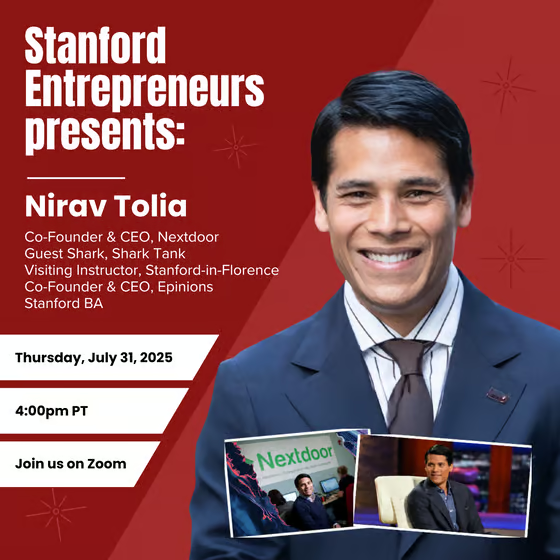
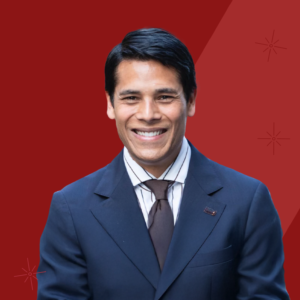
Nirav Tolia is a technology entrepreneur best known as the Co-Founder, Chief Executive Officer, President, and Chairperson of the Board of Directors at Nextdoor, the global hyperlocal social networking platform that connects neighbors and neighborhoods around the world. Prior to Nextdoor, Tolia was an Entrepreneur-in-Residence at Benchmark Capital, served as Chief Operating Officer of Shopping.com, and was Co-Founder and CEO of Epinions.com, one of the early pioneers in user-generated reviews. He also serves as Non-Executive Chair of Hedosophia and is a co-founding director of the William S. Spears Institute for Entrepreneurial Leadership at SMU’s Cox School of Business. Tolia earned a Bachelor of Arts in English from Stanford University and lives in Highland Park, Texas with his wife and three sons.
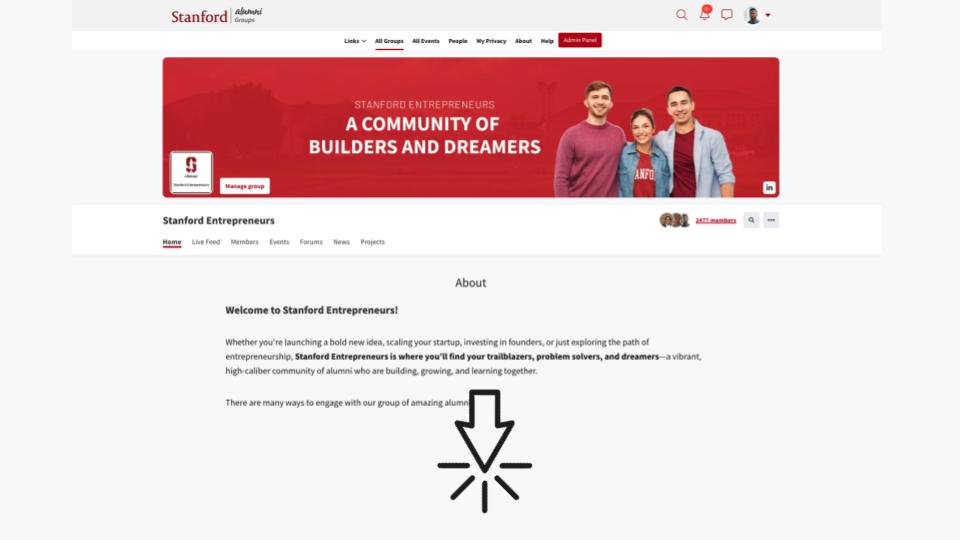
Nirav Tolia is a serial entrepreneur, co-founder and CEO of Nextdoor, former CEO of Shopping.com (acquired by eBay), and a guest Shark on Shark Tank. A Stanford alumnus, Tolia has built multiple consumer internet companies rooted in one core belief: strong communities-online and offline—matter deeply. He shared lessons from his unconventional path into entrepreneurship, the failures that shaped his career, and what it truly takes to build companies that last during a recent Stanford Entrepreneurs Alumni event.
Stanford Entrepreneurs (SE): You’ve often described yourself as an “accidental entrepreneur.” How did that journey begin?
Nirav Tolia (NT):
I never planned to be an entrepreneur. I was pre-med at Stanford – both my parents and grandparents were physicians – so that was the expected path. But during my time in Fleet Street, the a cappella group I was part of, I volunteered to be the business manager. I didn’t know anything about business, but I cared deeply about the group and wanted it to succeed.
That experience was pivotal. I learned about pricing, building an audience, and managing finances—not because I wanted a business career, but because I loved what I was working on. Looking back, that was my first real exposure to entrepreneurship: discovering something I was naturally good at by following passion, not a plan.
SE: How did technology and the internet influence your shift away from medicine?
NT:
Growing up in Odessa, Texas, I had a strong sense of community but very limited exposure to the world beyond my town. When I plugged into the internet for the first time at Stanford and discovered online communities like Usenet, it was transformative. Suddenly, geography didn’t limit connection anymore.
That moment stayed with me. It wasn’t a business idea-it was an emotional realization. Technology could help people feel less alone. That insight ultimately shaped everything I’ve built since, including Nextdoor.
SE: Your first major role was at Yahoo during its explosive growth. Why leave something so successful?
NT:
I was incredibly lucky to join Yahoo as employee number 84 in 1996. The company was growing at a pace that’s hard to describe—headcount, users, valuation, everything went up every day. But I realized that no matter how hard I worked, my individual impact was marginal.
I missed the feeling of direct ownership—the idea that what I put in directly affected outcomes. I wanted to build something where input equaled output. That’s what ultimately pushed me to leave and take the leap into entrepreneurship, even when it didn’t make sense to most people around me.
SE: Opinions.com (later Shopping.com) had both extreme highs and near-collapse moments. What did that experience teach you?
NT:
Failure was the defining feature of that journey. We went from being the “instant company” to being three weeks away from shutting down. I heard “no” from investors over a hundred times. We laid people off, merged companies, rebranded, missed earnings as a public company and eventually exited to eBay for over $600 million.
The lesson wasn’t about success—it was about resilience. When you’re in the middle of failure, there’s nothing glamorous about it. But those moments build the muscle you need to survive entrepreneurship. Almost every meaningful success I’ve had came directly out of adversity.
SE: Nextdoor emerged after another failed startup. Why return to community again?
NT:
After my sports community startup failed, I was exhausted. I actually offered to give the remaining capital back to our investors. Instead, my lead investor encouraged us to try one more time to go back to what truly mattered to us.
We realized there were online communities for friends (Facebook), careers (LinkedIn), and interests (Twitter), but none for the most fundamental community of all: where you live. At the same time, Americans were increasingly disconnected from their neighbors. That gap felt deeply personal to me—and meaningful enough to justify taking on a very hard problem.
SAE: What was different about how you built Nextdoor in its early days?
NT:
We did everything manually. Before writing code, we carried monitors into people’s living rooms and talked to them directly. We personally spoke with every early user across 170 neighborhoods in 26 states. It was slow, unscalable, and absolutely necessary.
Too many founders want to jump straight to scale. But before you scale, you need obsession with the front line—listening, observing, and validating real pain. You’re not building a vitamin; you’re building a painkiller. People will go out of their way for a painkiller.
SAE: What core advice do you give to aspiring entrepreneurs today?
NT:
First, focus on who you’re building with before what you’re building. Teams matter more than ideas.
Second, work on problems you genuinely care about—because the idea will change completely over time.
Third, do the unscalable work early. Don’t outsource learning. Don’t avoid the messy parts.
Entrepreneurship isn’t about avoiding failure—it’s about being willing to keep going when failure shows up again and again.
This script is lightly edited and condensed.